
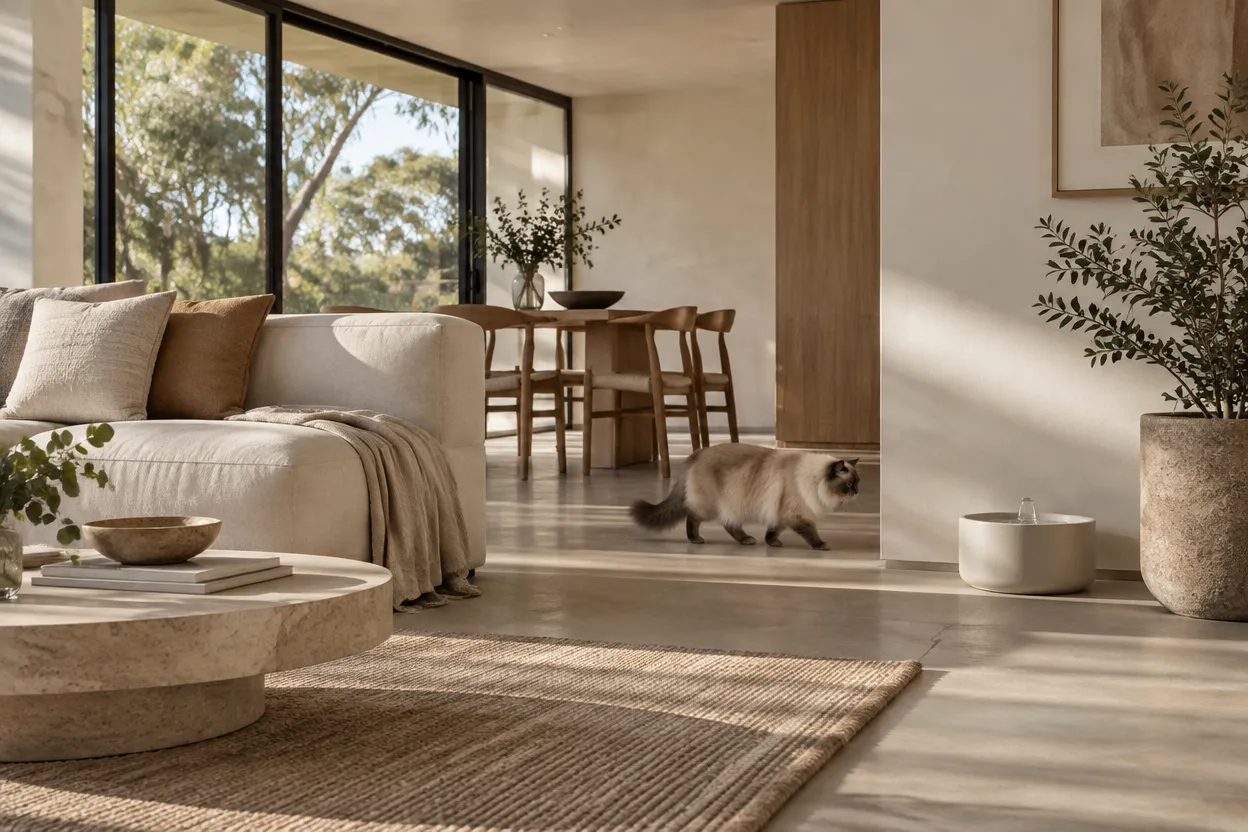
When choosing a cat water fountain, the material is often one of the first things you notice. Ceramic brings a soft, tactile presence to a room. Stainless steel feels practical and understated. Both can be considered choices — but neither is automatically the best choice for every cat or every home.
The more useful question is how each material fits into everyday life. Think about cleaning, durability, the shape of the drinking area and the parts you will need to maintain over time.
The short answer: well-made, appropriately finished ceramic and stainless steel can both work for a cat water fountain. If you value a weightier, homeware-inspired object, ceramic may appeal. If resistance to everyday knocks and easier handling are your priorities, stainless steel may be a better fit. The specific fountain design still matters more than the material label alone.
Ceramic vs stainless steel: at a glance
| What to consider | Ceramic | Stainless steel |
|---|---|---|
| Look and feel | Soft, tactile and often homeware-like | Clean, functional and contemporary |
| Weight | Often heavier; may feel planted in place | Often lighter, depending on construction |
| Accidental drops | Can chip or crack | Generally more tolerant of knocks; can dent |
| Surface care | Smooth, intact glaze is important | Smooth, well-finished metal is important |
| What to inspect | Glaze quality, chips, hairline cracks | Finish, joins, corrosion, rough edges |
| Best fit | Material character and a stable presence | Durability and straightforward handling |
These are general material tendencies, not guarantees about any particular model. A fountain may also combine a ceramic or steel drinking surface with plastic, silicone or other components below it.
What ceramic does well
Ceramic has a visual quality that can make a fountain feel closer to a considered home object than a small appliance. Rounded forms, soft glazes and warm neutral finishes can sit naturally alongside timber, stone and other materials already found in the home.
It also tends to have some weight. Depending on the shape and base, that weight may help a fountain feel stable where it sits. It can also make carrying it to the sink less convenient, so consider how easily you can lift and handle the individual parts.
The surface needs a closer look. Choose a fountain made for drinking-water contact, with a suitable, intact glaze. Chips, cracks and damaged glaze are reasons to stop using a ceramic vessel until its safety can be assessed or the part is replaced. Decorative pottery is not automatically appropriate for holding drinking water.
What to check: Is the water-contact glaze suitable for its intended use? Are the edges smooth? Can the basin be lifted and washed comfortably? Does the maker provide clear care instructions and replacement parts?
What stainless steel does well
Stainless steel is often selected for its everyday practicality. A well-made steel basin can tolerate normal handling without the same risk of cracking if it is knocked against a sink or counter. Depending on thickness and construction, it can still dent, scuff or develop visible water marks.
Its restrained appearance suits a different kind of interior. Brushed metal can feel neat and architectural, while highly polished metal may show fingerprints and reflections more readily. Neither look is inherently better; it is a matter of preference and finish.
It is worth checking the entire product rather than assuming that a fountain advertised as ‘stainless steel’ is made of metal throughout. The drinking tray, reservoir, pump housing, tubing and filter holder may be different materials. Look for a suitable material specification and a smooth finish without sharp or difficult-to-clean joins.
What to check: Which parts actually touch the water? Is the finish smooth? Are seams accessible for cleaning? Are the pump and filters easy to remove and replace?
Cleaning matters more than the headline material
A fountain circulates water; it does not eliminate the need for cleaning. Water-contact surfaces, pump chambers and small channels can collect hair, residue and mineral deposits. A filter is not a substitute for washing those parts.
Veterinary guidance encourages keeping cats’ drinking water fresh and washing water bowls daily. For a fountain, follow the manufacturer’s specific instructions for cleaning its components and replacing or rinsing filters, and increase attention if you notice residue, odour or reduced flow.
A simple maintenance routine looks like this:
- Refresh the water regularly. Check the level and cleanliness every day.
- Disassemble as instructed. Remove washable pieces and unplug the device before handling the pump.
- Clean the parts you can actually reach. Pay attention to the drinking area, channels and pump housing; use products and methods approved by the manufacturer.
- Inspect while reassembling. Look for chips in ceramic, rough or damaged steel, worn seals and any build-up around the pump.
When comparing two fountains, ask which one makes this routine easier. A beautiful surface will not compensate for hidden corners that are awkward to wash.
Does ceramic or stainless steel make a fountain quieter?
Not on its own. The sound you hear may come from the pump, vibration against the supporting surface, water falling back into the basin or operation at a low water level.
The fountain’s assembly, pump selection, water path and installation can all affect how it sounds. Material can be one part of that system, but a ceramic body does not guarantee silence, just as a steel body does not necessarily mean more noise.
If quiet operation is important, look for credible testing of the specific complete fountain, ideally under realistic water-level and placement conditions. Treat unsupported phrases such as ‘silent’ or ‘whisper quiet’ cautiously.
Five questions to ask before choosing
- Will my cat use the drinking area? Consider access, width, water movement and whether your cat seems comfortable approaching it.
- Can I clean it without a struggle? Check whether the basin, pump cover and water path come apart in a way you can maintain.
- Is the whole water-contact system well considered? Look beyond the visible ceramic or metal shell to seals, plastic parts, tubing and filters.
- Can I obtain replacement parts in Australia? Filter and pump availability can matter more over time than the initial appearance.
- Does it work in my space? Allow for its footprint, power connection, spill management and whether it fits comfortably alongside the rest of the room.
A considered approach to ceramic hydration
At LAPCOVE, our first ceramic fountain is being developed around the relationship between everyday cat care and the home. Material, form, cleaning access and visual presence are part of that design process. The finished product and its performance remain subject to real-world validation.
Which material should you choose?
Consider ceramic if you enjoy the presence of glazed materials, want a fountain that feels at home among other considered objects, and are comfortable handling a potentially heavier, breakable basin.
Consider stainless steel if resistance to accidental knocks, relatively straightforward handling and a practical finish matter more to you. Compare construction quality rather than assuming every steel fountain is identical.
Choose neither on material alone. A smooth, accessible drinking area, honest material information, an easy cleaning routine, a reliable pump and readily available spare parts should all form part of the decision.
Cats have individual preferences, too. Some respond well to running water; others prefer a familiar still-water bowl. Keeping an alternative fresh-water source available while introducing a new fountain can make the transition more comfortable.
Frequently asked questions
Is ceramic more hygienic than stainless steel?
Not automatically. An intact, suitable ceramic glaze and a smooth, well-finished stainless steel surface can both be cleaned. Hygiene depends on the condition of the surface, the fountain’s hidden components and how consistently the complete system is maintained.
Can I put ceramic or stainless steel fountain parts in the dishwasher?
Only when the specific manufacturer’s instructions say those parts are dishwasher-safe. Do not assume that all ceramic glazes, steel assemblies, seals or electrical components tolerate the same cleaning method.
Will a cat drink more water from one material?
There is no reliable reason to assume that the material alone decides how much an individual cat will drink. Water freshness, placement, the drinking surface and water movement may influence preference. If your cat’s drinking habits change noticeably, seek veterinary advice rather than relying on a fountain to solve the problem.
A final thought
The best material is the one that fits your cat’s preferences and the routine you can genuinely maintain. Ceramic offers a particular material warmth; stainless steel offers a different kind of practicality. In either case, look closely at the design behind the surface.
If you are exploring different fountain styles, you can also browse our cat water fountain collection.
Sources and further reading
- VCA Animal Hospitals — Tips to Encourage Cats to Drink More Water. General veterinary guidance on fresh water, water bowls and fountains.
- U.S. Food and Drug Administration — Questions and Answers on Lead-Glazed Traditional Pottery. Background on why the quality and intended use of ceramic glazes matter; not an Australian product-compliance certification.